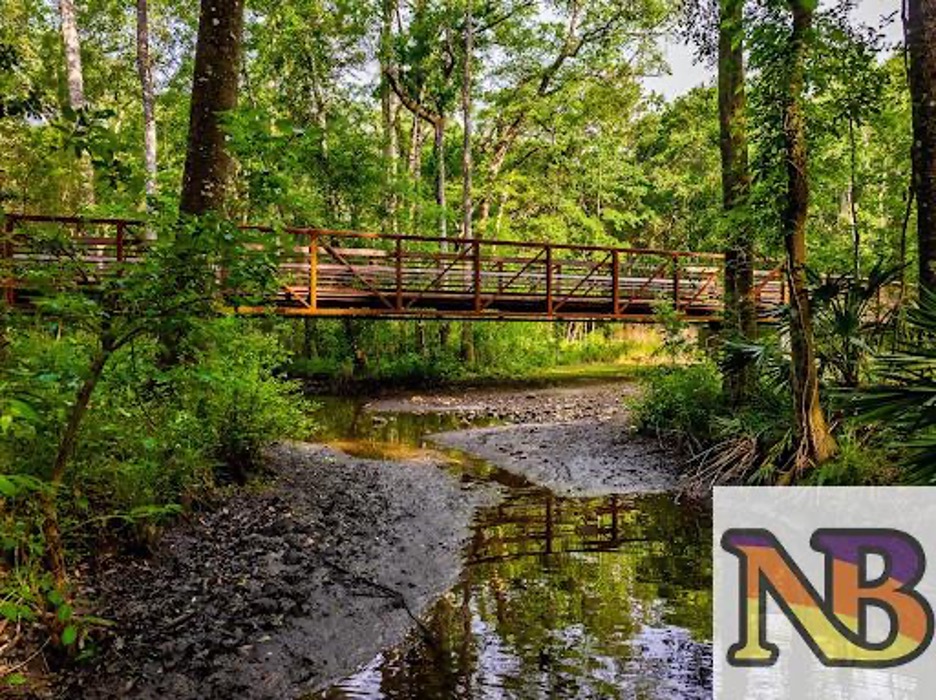
Bridge over stream, St. Marks headwaters Greenway, Tallahassee, FL
Photo credit: Ryan Ketterman Photography
State and federal parks, along with any public land, serve a wide range of purposes. These properties are set aside for conservation, recreation, education, and public access. Planning park infrastructure for these lands requires a thoughtful balance between delivering safe, reliable facilities and safeguarding the natural and cultural resources that give these spaces their enduring value.These are different from private development because public land construction must meet rigorous standards for compliance, longevity, and environmental stewardship.
Navigating Regulatory Requirements
One defining aspect of building on public lands is the regulatory framework that governs every phase of a project. Federal and state agencies typically require compliance with environmental review processes, accessibility standards, and land management processes. These requirements ensure that the park infrastructure supports public use without compromising a delicate ecosystem or protected resources.
Early coordination with land managers and regulatory agencies is essential. Clear documentation, site analysis, and alignment with the park’s master plans help ensure that these projects move forward efficiently while meeting all the necessary legal and environmental obligations.
Designing for Durability and Public Use

Boardwalk along wetlands, Salinas Park, Cape San Blas, FL
Photo credit: Ryan Ketterman Photography
The infrastructure of a state or federal park must withstand heavy use, seasonal weather changes, and long service life. Trails, bridges, boardwalks, and shelters often serve thousands of visitors each year, making durability a priority. Designs should account for load capacity, drainage, and easy long-term maintenance while remaining adaptable to future needs.
Well-planned trail systems also play a critical role in managing visitor movement. Clearly defined routes reduce informal paths that can damage vegetation and cause erosion. By directing use to designated areas, infrastructure supports visitor safety and landscape protection.
Environmental Responsibility as a Core Principle
Environmental responsibility is central to all public land projects. Construction approaches that minimize ground disturbance, protect waterways, and preserve native vegetation are widely recognized best practices. Elevated structures, limited heavy equipment on the ground, and careful material staging help reduce the impact during construction and throughout the life of the project.
Infrastructure that works with the landscape rather than reshaping helps maintain ecological processes like water flow, soil stability, and wildlife movement. These considerations are important to sensitive habitats because even small disruptions can have negative long-term effects.
Long-Term Planning and Stewardship

Timber walkway in sand, Pensacola Navy Air Station Nature Trails, Pensacola, FL
Public land infrastructure is an investment in long-term stewardship. Structures should be designed for safety and functionality as well as their resilience decades into the future. Thoughtful planning reduces the need for frequent repairs, limits environmental disruption over time, and supports public access.
When infrastructure is designed for durability, compliance, and environmental responsibility, it becomes a conservation tool rather than a challenge to it. This approach allows parks to fulfill their mission of protecting natural resources as well as serving the public.
Successful park infrastructure projects require a construction team that has experience in eco-friendly construction as well as a commitment to work with others for the benefit of nature. From trail connections to crossings and gathering spaces, thoughtful planning ensures that public lands remain accessible and protected.
If you’d like to discuss infrastructure solutions designed specifically for public lands, contact Nature Bridges to learn how effective planning and construction can support your public property’s long-term stewardship and public use.



P.O. Box 516
Monticello, FL 32345
Phone: (850) 997-8585
Fax: (850) 385-3493
estimating@naturebridges.com