

Elevated walkway through forest, Alys Beach Educational Boardwalks, Alys Beach, FL
Outdoor environments provide ideal opportunities for learning, but access needs to be managed carefully to protect the ecosystem. Boardwalks, observation decks, and other elevated structures play a role in balancing visitor education with preservation. When thoughtfully placed, these outdoor structures allow visitors to engage with nature landscapes while minimizing environmental impact.
Access that Supports Learning
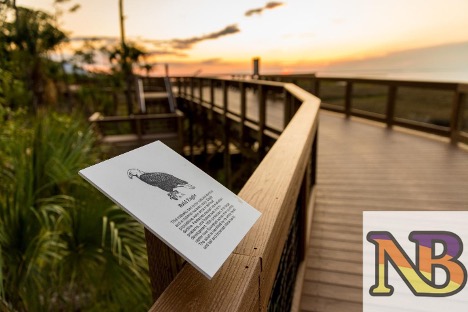
Sign along boardwalk, Salinas Park, Port St. Joe, FL
Photo credit: Ryan Ketterman Photography
Boardwalks and other walkways guide visitors through sensitive areas like wetlands and forest floors without disturbing soil or vegetation. By creating clearly designated routes, these structures prevent off-trail excursions, which is the leading cause of habitat degradation in high-traffic natural areas. This controlled access allows learners to observe ecosystems up close while maintaining the conditions necessary for those ecosystems to function.
In many parks, boardwalks include informational or interpretive signage that explains local wildlife, plants, and environmental processes. This combination of access and information supports meaningful environmental education by helping visitors connect directly to what they are learning.
Observation Points with Strategic Placement
Features like scenic overlooks and observation decks enhance the educational value of a trail by providing designated spaces to pause and observe. These areas allow visitors to safely take in views of waterways, wildlife habitats, and vegetation zones without entering the sensitive area.
Placement of these structures is critical. Overlooks are often positioned to highlight natural transitions, such as the edge of a wetland or the meeting point of forest and shoreline, where ecological activity is most visible. When the educational environment concentrates visitor activity in these locations, land managers can protect surrounding areas from repeated disturbance while still encouraging an engaging experience.
Protection of Sensitive Environments

Aerial view of boardwalk and observation decks, Wildwood Park, Greenville, NC
Photo credit: Ryan Ketterman Photography
Elevated structures reduce direct contact with the ground. This prevents soil compaction, erosion, and damage to vegetation, which is particularly important in ecosystems that recover slowly from disturbance. Wetlands, for example, rely on delicate soil and plant systems to filter water and support biodiversity. When we keep foot traffic above these areas with elevated walkways, we can help maintain their ecological function.
At the same time, boardwalks and platforms improve safety by providing stable footing in uneven or water-prone environments. This makes natural areas more accessible to a wider range of visitors while reducing the likelihood of damage caused by unintended detours.
Enhancements of Visitor Experience
Well-designed boardwalk systems contribute to the overall quality of park amenities by making natural spaces easier to navigate and more enjoyable to explore. Visitors are more likely to engage with a landscape when access is clear, safe, and thoughtfully designed and built. Observation points create opportunities for reflection, photography, and learning, reinforcing connections to nature.
Boardwalks and observation features demonstrate how infrastructure can support both conservation and education. When we guide movement and provide structured opportunities for engagement, these elements help protect the ecosystem while allowing a deep understanding for visitors.
To explore how boardwalks, scenic overlooks, and observation decks can support environmental education and protect sensitive landscapes, contact Nature Bridges to discuss your project goals. Our team can help design access solutions that enhance learning while preserving nature environments for future generations.