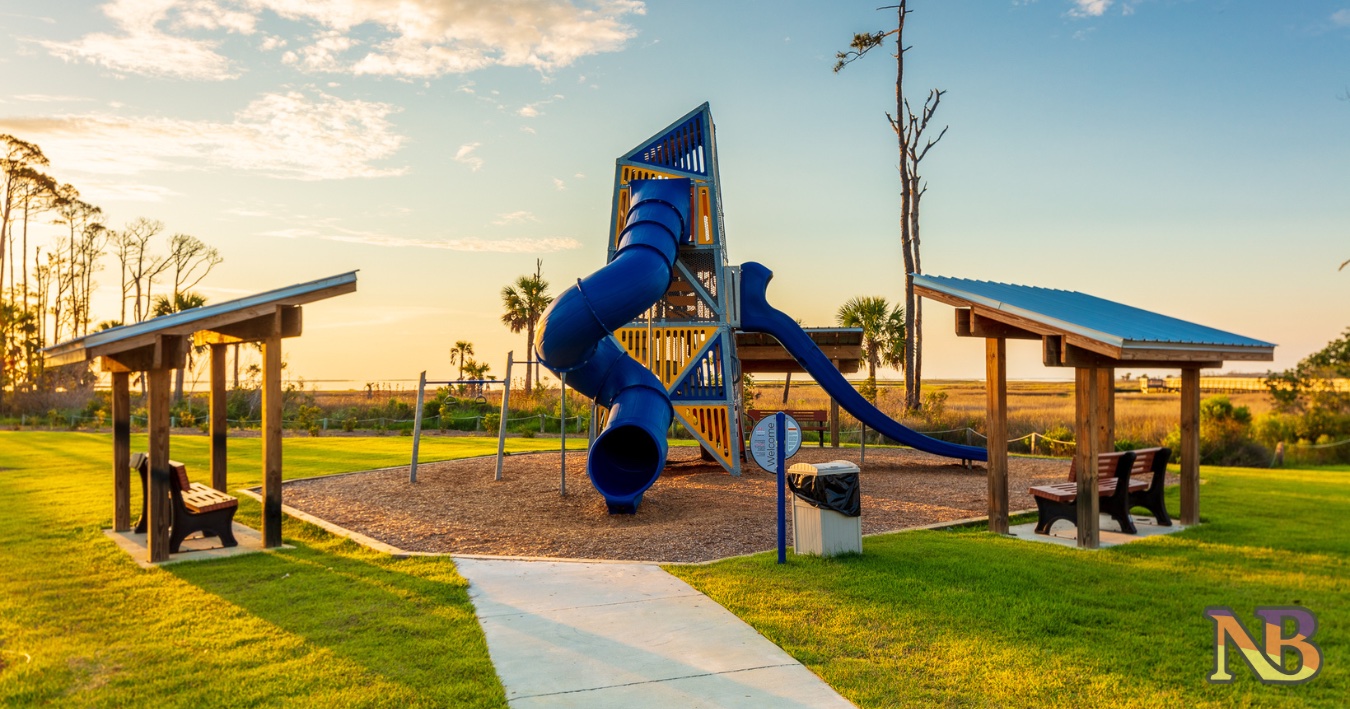
Playground with shaded benches, Salinas Park, Port St. Joe, FL; Photo credit: Ryan Ketterman Photography
Creating comfortable outdoor spaces involves more than building trails or placing benches. One of the most overlooked elements of park design is thoughtful shade planning. Trees, pavilions, gazebos, and other shaded areas help visitors enjoy parks longer while also supporting healthier landscapes. By considering how shade interacts with the surrounding environment, designers can improve environmental comfort and create spaces that remain inviting throughout the year.
Using Natural Shade
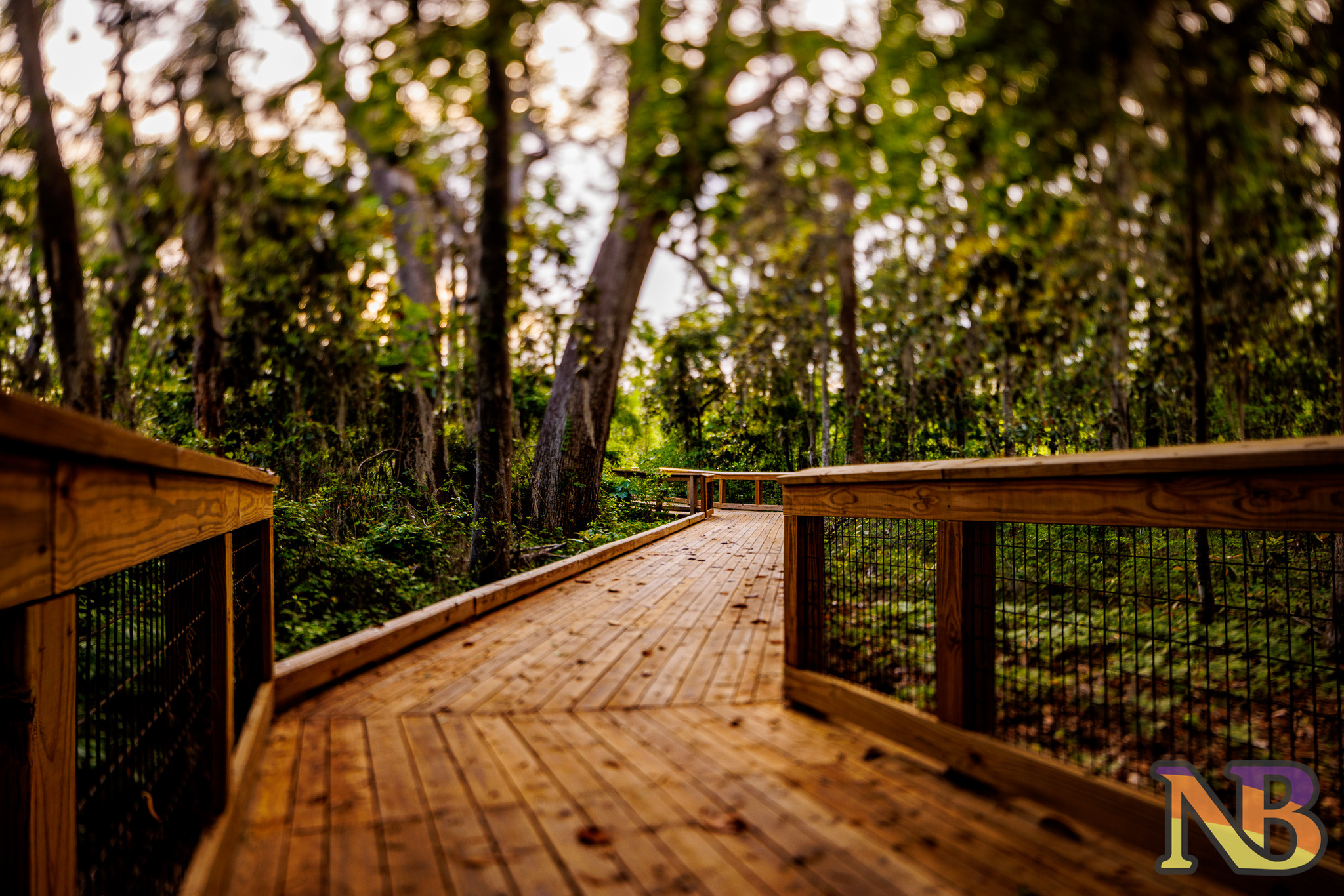
Boardwalk through forest, Debbie Lightsey Nature Park, Tallahassee, FL; Photo credit: Ryan Ketterman Photography
Mature trees provide some of the most valuable shade in parks and recreation areas. Their canopies help reduce surface temperatures on trails, gathering areas, and open spaces, which makes parks more comfortable during warmer months. Visitors are more likely to stop and rest, spending more time outdoors, when relief from direct sunlight is readily available.
Shade also benefits wildlife. Cooler ground temperatures create more favorable conditions for many species, providing shelter from extreme heat. When we preserve existing trees, we help maintain these natural benefits while contributing to the overall character of a park.
Combining Natural and Built Shade

Shaded seating area under elevated walkway, Salinas Park, Port St. Joe, FL; Photo credit: Ryan Ketterman Photography
While tree canopies provide an excellent opportunity for natural shade, they cannot always be placed where visitors need the most relief. Gathering areas, trailheads, playgrounds, and waterfront destinations often benefit from purposeful shade structures that create comfortable places to rest and spend time outdoors.
Pavilions, gazebos, picnic shelters, and covered overlooks provide dependable shade regardless of the surrounding vegetation or time of year. These structures help visitors enjoy parks during warmer months by creating cooler places to gather or relax. They can also support community activities by providing comfortable spaces for educational programs, family gatherings, and other outdoor events.
When thoughtfully located, built shade works alongside existing tree canopies rather than replacing them. A pavilion nestled beneath trees, for example, can extend the usable hours of a park while preserving open green spaces and maintaining natural views. Likewise, strategically placed shelters along trails or near observation areas encourage visitors to pause, enjoy the scenery, and spend more time in the park.
Successful shade planning considers both natural and constructed elements from the beginning of a project. By combining existing trees with well-designed outdoor structures, parks can improve environmental comfort, accommodate a wider range of activities, and create welcoming destinations throughout the year.
Protecting the Landscape During Construction
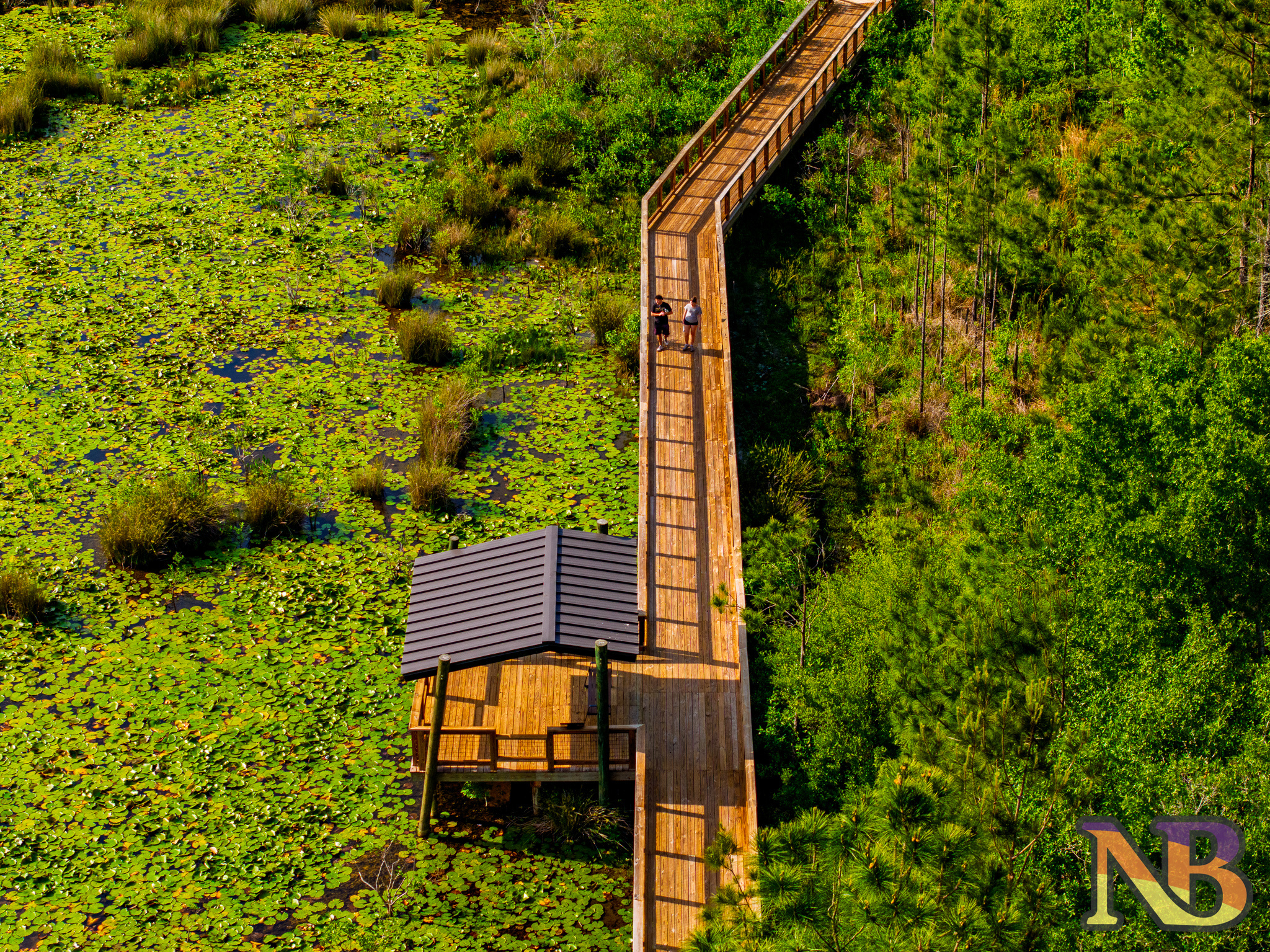
Pavilion and boardwalk through wetlands, Debbie Lightsey Nature Park, Tallahassee, FL; Photo credit: Ryan Ketterman Photography
Creating shaded outdoor spaces also begins with responsible construction practices. Especially in environmentally sensitive areas, techniques such as top down construction can help reduce ground disturbance while preserving existing vegetation. Protecting established trees during construction allows future visitors to enjoy the shady benefits of mature canopies long after the project is complete.
Preserving native plants wherever practical also contributes to healthier park ecosystems. Existing vegetation is often well-adapted to local conditions, helping maintain the natural landscape while supporting native wildlife.
Planning for Long-Term Environmental Comfort
Successful parks consider how people will use a space throughout the day and across every season. Shade from trees and outdoor structures can influence where visitors gather and how comfortable they are during their visit.
Thoughtful shade planning supports environmental comfort while protecting valuable vegetation and creating welcoming outdoor destinations for both people and nature. When we combine natural shade, well-placed structures, and responsible construction methods, a park can provide enjoyable experiences while preserving the landscape that makes it unique.
If you’re planning a park, trail, campground, or other public use space, Nature Bridges can help develop outdoor structures that enhance visitors’ comfort while respecting the environment. Contact Nature Bridges to learn more about park infrastructure construction and building solutions that are designed for lasting outdoor recreation.



P.O. Box 516
Monticello, FL 32345
Phone: (850) 997-8585
Fax: (850) 385-3493
estimating@naturebridges.com