

Bridge along trail with natural vegetation, Debbie Lightsey Nature Park, Tallahassee, FL
Photo credit: Ryan Ketterman Photography
Trails and walkways allow us to have valuable access to parks and other outdoor recreation areas, but the landscapes surrounding those paths are equally important. Maintaining healthy native vegetation along trails supports ecosystem stability, protects wildlife habitats, and contributes to long-term environmental resilience. When trail systems are planned carefully, they can work alongside natural plant communities instead of disrupting them.
The Ecological Role of Native Plants
Native plants are species that naturally occur within a region and have adapted over time to local climate, soil, and wildlife conditions. Because of this, they usually require less irrigation, fertilizer, and maintenance than non-native landscaping. More importantly, native plant communities provide food and shelter for birds, pollinators, and other wildlife that depend on them.
Healthy vegetation also supports broader trail ecology by stabilizing soil, filtering runoff, and helping regulate the habitat’s temperature. In many areas, vegetation acts as a protective buffer that helps maintain the balance of the ecosystem, even with increased public use. One of the most important functions of native plants is erosion prevention. Root systems hold soil in place, which reduces the impact of rain and foot traffic. Along slopes and waterways, vegetation helps slow the movement of water and minimizes sediment loss.
When vegetation is repeatedly disturbed or removed, trails are more vulnerable to washouts and soil degradation. Informal paths that are created by off-trail exploration can further damage root systems and destabilize the surrounding landscape. When we maintain healthy native vegetation around designated access routes, we can reduce these risks while preserving the natural character of the site.
Supporting Native Growth Through Careful Placement
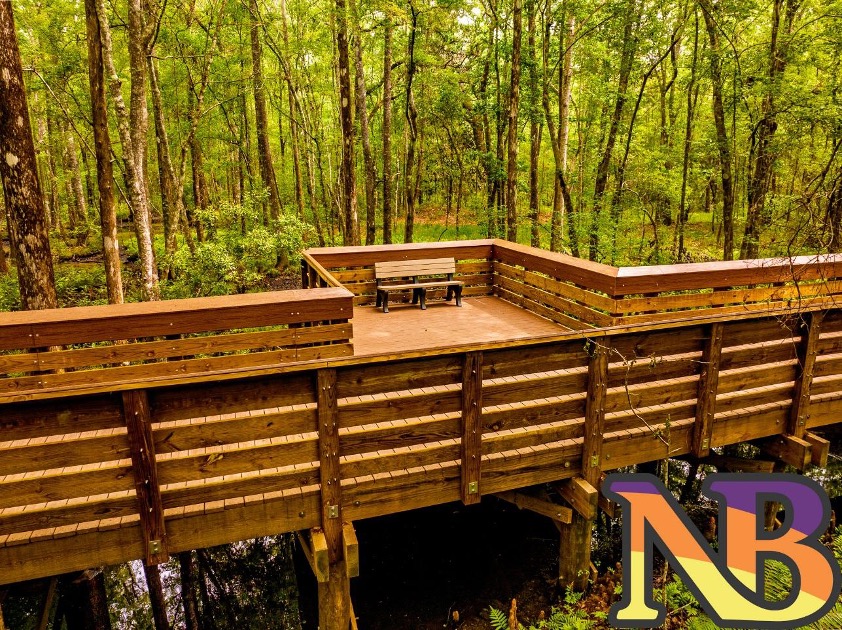
Boardwalk and overlook surrounded by native plants, St. Marks Headwaters Greenway, Tallahassee, FL
Photo credit: Ryan Ketterman Photography
One of the best ways to reduce long-term land maintenance requirements is to preserve native vegetation along trails and replace it when it’s necessary to remove some during construction. Because native species are adapted to local conditions, they’re usually more resilient to drought, pests, and seasonal weather changes. This reduces the need for intensive upkeep, and it supports more sustainable landscape management practices over time. Naturalized landscapes can also improve the visitor experience by creating environments that reflect the local ecosystem rather than introducing plants that feel disconnected from the habitat. This can help visitors, including those looking for both photographic and learning experiences, enjoy the area in its natural state.
Protecting Landscapes Through Thoughtful Planning

Elevated walkway winding through native trees, Salinas Park, Port St. Joe, FL
Photo credit: Ryan Ketterman Photography
Healthy native vegetation plays an essential role in trail ecology, erosion prevention, and habitat protection. When trail and outdoor structures are planned with existing ecosystems in mind, access and conservation can work together more effectively. This involves carefully planning trails to be built around trees and other plant life and using preservation techniques like top down construction to minimize the disturbance of the area.
To work with a construction company that thoughtfully plans trails and structures, supporting native vegetation and long-term environmental health, contact Nature Bridges to discuss your project goals. Our team can help develop environmentally responsible structures and construction solutions that protect natural landscapes while maintaining safe public access.