
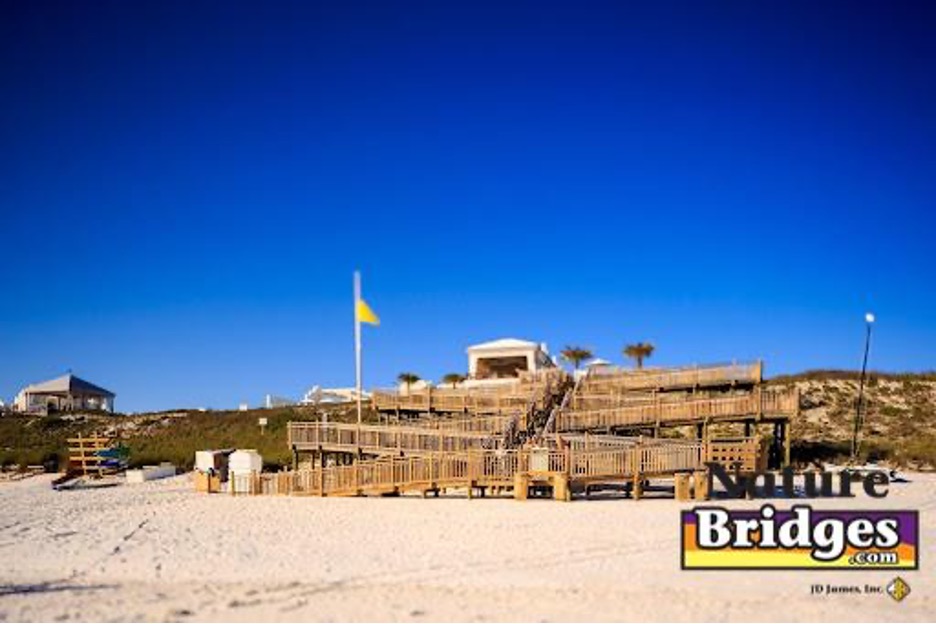
Accessible dune walkover at Beach Club Plaza, Alys Beach, FL
Photo credit: Ryan Ketterman Photography
Outdoor spaces are meant for everyone to enjoy. These places allow families to gather and visitors to explore. With the right elements, communities can even connect with nature. Designing an accessible outdoor space ensures that those opportunities are open to all, regardless of age or ability. Through inclusive design and thoughtful material choices, your designer can carefully plan a public area that can be both beautiful and barrier-free.
Designing for Inclusion
Accessibility starts with understanding how people move and interact with their surroundings. Several things can make it easier for people with wheelchairs, mobility aids, or strollers to navigate comfortably. Smooth transitions between surfaces and wide entryways combine with gentle slopes to make areas accessible. Both shade structures and docks use ample turning space and stable surfaces to allow everyone to participate equally in outdoor activities.
Blending Function and Aesthetics
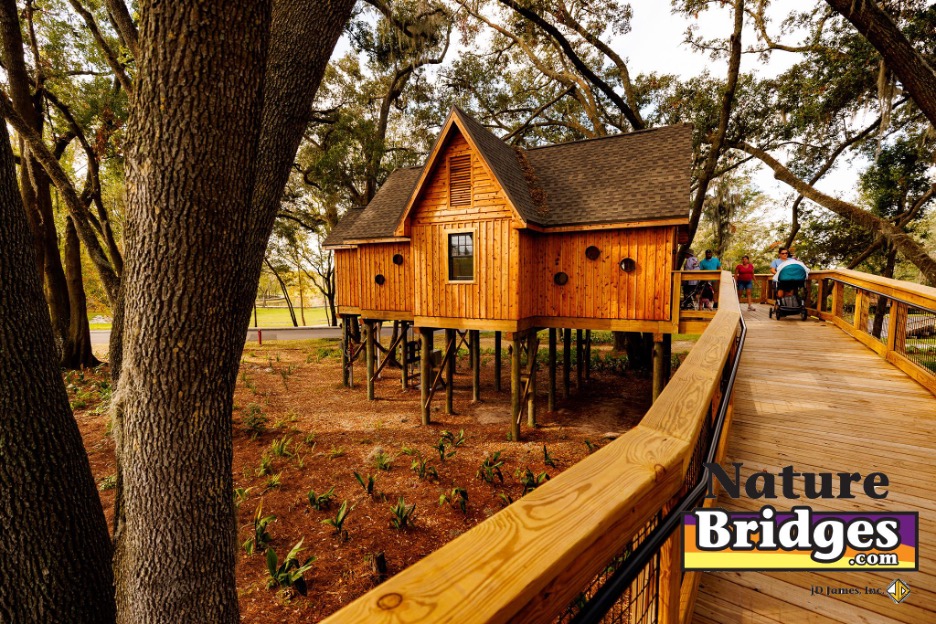
Accessible walkway leading to the Bonnet Springs Park Treehouse, Bonnet Springs Park, Lakeland, FL
Photo credit: Ryan Ketterman Photography
Regulations such as those from ADA are important, but creating an inclusive trail system is more than that; it’s about shaping experiences. Handrails and ramps can be integrated into natural landscapes to improve safety and comfort. Designers can take inspiration from urban bridge projects that balance form and function and use similar ideas to make trails and overlooks more intuitive and accessible.
Intuitive, accessible railing systems can merge aesthetics with strength, showing how accessibility features can complement natural beauty rather than compete with it. Every detail like tactile paths and seat height contributes to an environment that invites everyone in.
Inclusion and Sustainability
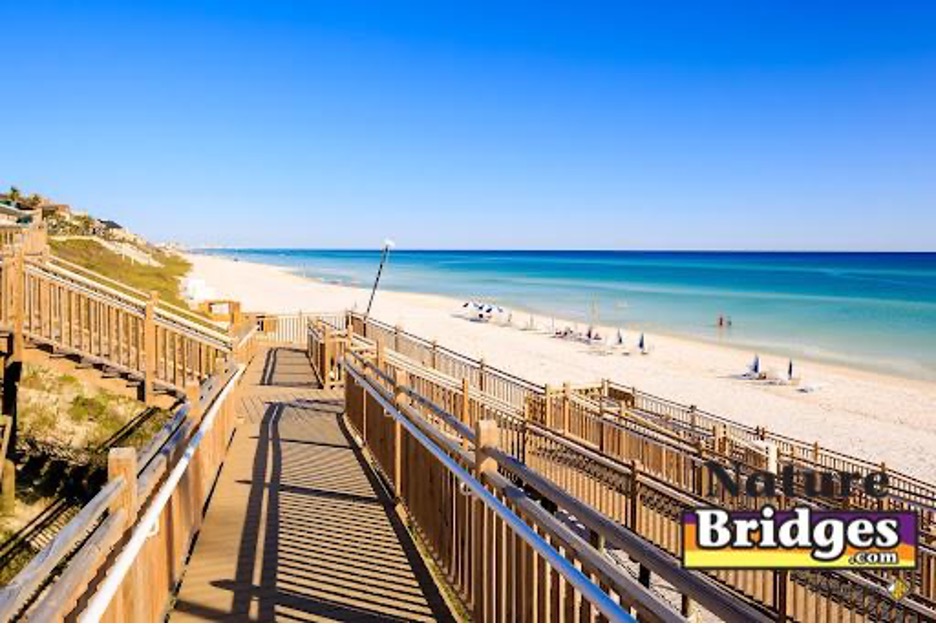
View of the ocean from an accessible dune walkover, Beach Club Plaza, Alys Beach, FL
Photo credit: Ryan Ketterman Photography
Natural materials like timber and stone lend warmth to an outdoor project, and low-maintenance composites can ensure durability. When ramps and elevated pathways are planned from the beginning stages of a project, they become functional and seamless extensions of the landscape, adding elegance along with environmentally sensitive construction.
Inclusivity and sustainability go hand in hand. When outdoor areas are designed for everyone, they distribute foot traffic more evenly and reduce wear on concentrated routes. Thoughtful drainage, durable materials, and accessible layouts contribute to the safety of the people who visit as well as our environment.
Accessibility transforms outdoor recreation into a shared experience for all. By combining inclusive trail design with sustainability and style, communities create environments that welcome every visitor. If you’re planning a bridge or trail in a community that values accessibility, contact Nature Bridges to learn how expert design can bring your vision – and your visitors’ dreams – to life.