
Boardwalk over wetlands, Neabsco Creek, Woodbridge, VA
Photo credit: Andrew Politano
Access to nature plays a major role in how people understand and value the environment. When visitors can safely and responsibly experience forests, wetlands, and waterways, they are more likely to develop an appreciation for these valuable spaces. This connection is central to environmental stewardship, supporting long-term conservation through education and awareness.
Access as a Tool for Understanding
Environmental education is important for conservation. Research shows that direct experience in nature strengthens learning and retention. Trails and boardwalks make these experiences possible by allowing people to observe ecosystems without damaging them. When access is carefully planned, visitors can observe sensitive environments in ways that support nature education while minimizing damage to the habitat. Clear pathways reduce off-trail exploration, which could otherwise lead to soil compaction, vegetation loss, and erosion.
Well-designed access also improves safety and environmental observation for visitors, helping them understand where they are meant to go and why those boundaries matter. This reinforces conservation education without the need for constant enforcement.
Guided Access to Protect Ecosystems

Boardwalk through forest, Alys Beach Educational Boardwalks, Alys Beach, FL
Guided access is a widely accepted conservation strategy in parks and preserves. Elevated walkways and designated crossings keep foot traffic above fragile ground, protecting the land and wildlife. In wetland environments, this approach helps maintain the natural flow of water and reduces sediment that can enter and obstruct waterways.
By directing visitor movement, sustainable access supports both ecological health and the education and experience of visitors. These principles are reflected in approaches used along elevated walkways designed for sensitive environments. Structures that follow the terrain rather than reshape it help preserve the landscape while still allowing public use.
Engaging Visitors to Build Stewardship
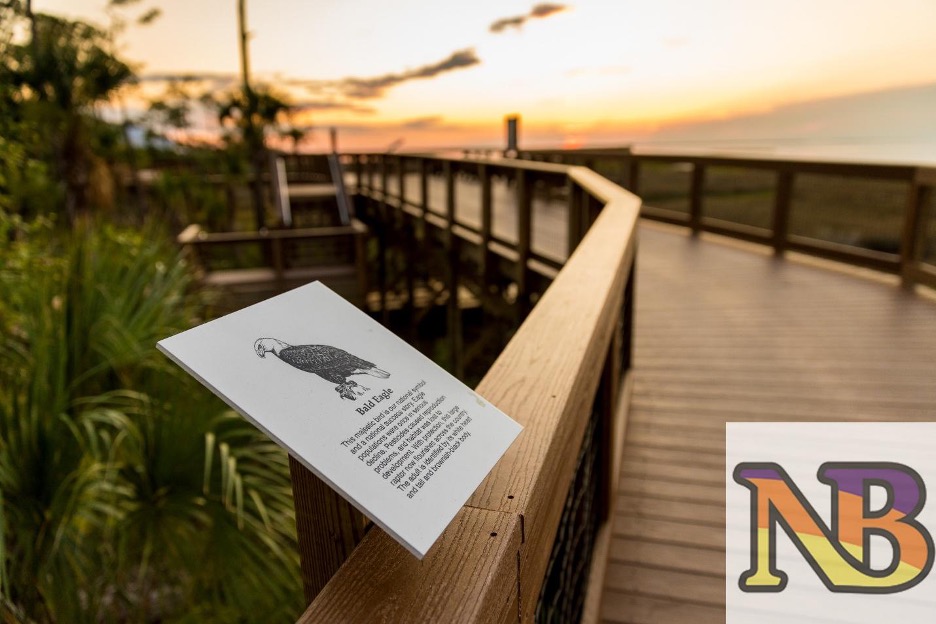
Educational signage along boardwalk, Salinas Park, Cape San Blas, FL
Photo credit: Ryan Ketterman Photography
When a walkway designer provides designated areas for visitors to pause and learn, engagement deepens. Overlooks and gathering areas provide opportunities for reflection and even education. Allowing for these moments encourages visitors to think about the area as a living system rather than just scenery, and this reinforces conservation awareness.
Placement and elevation are just two of the considerations designers use to protect landscapes while enhancing interaction. Pedestrian systems can connect people to nature and demonstrate how access can be both functional and conservation tools.
Thoughtful Design for Stewardship
Responsible access doesn’t weaken conservation goals. In fact, it strengthens them. By guiding visitors along well-design paths, natural areas are protected while becoming a journey that allows learning and appreciation. Over time, this balance supports stronger public understanding and support for long-term conservation.
If you’re ready to explore how access solutions can support environmental stewardship and conservation goals, contact Nature Bridges to discuss your project needs. The Nature Bridges crew can help plan structures that protect ecosystems and enhance meaningful engagement with nature.



P.O. Box 516
Monticello, FL 32345
Phone: (850) 997-8585
Fax: (850) 385-3493
estimating@naturebridges.com