
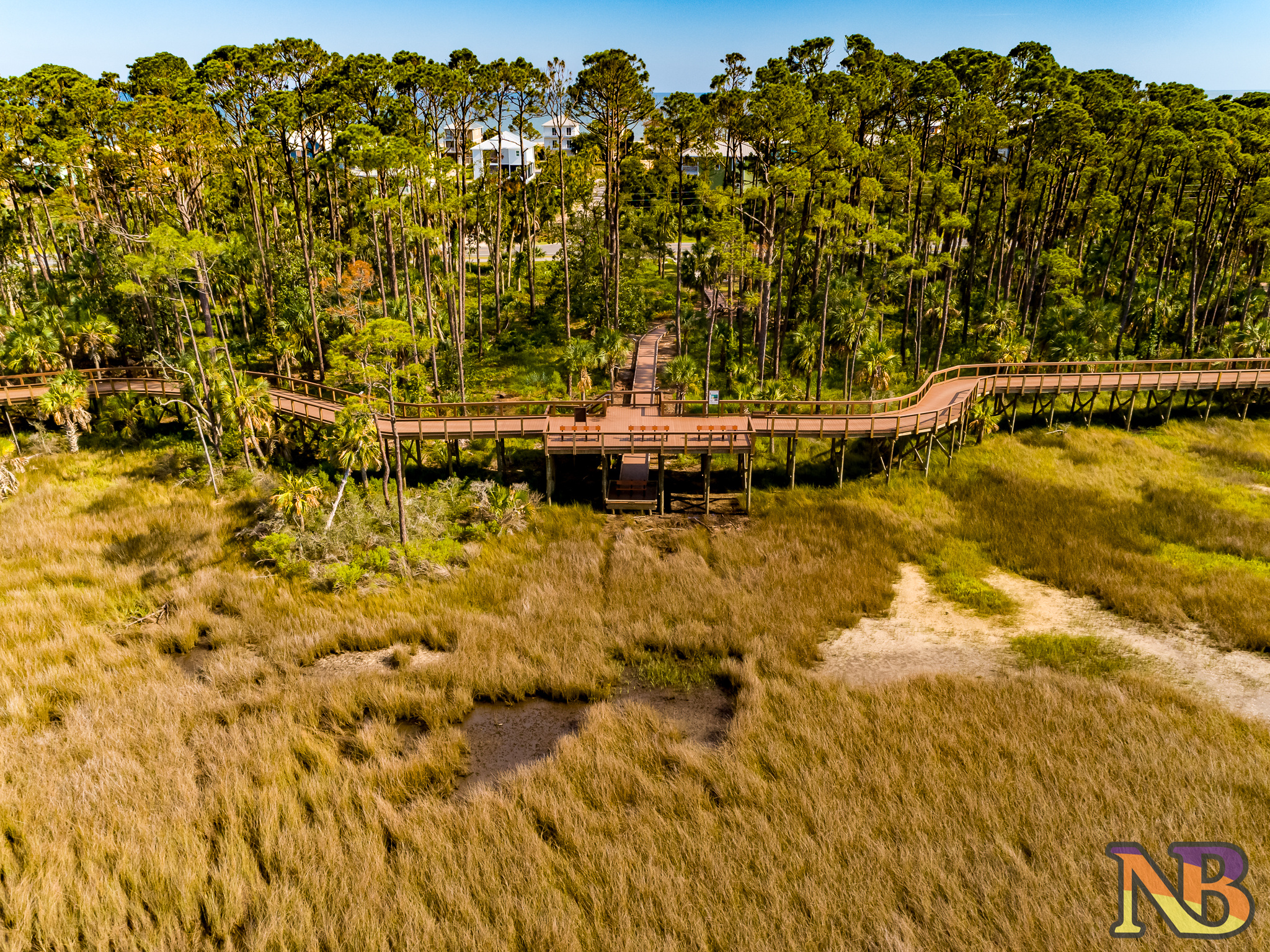
Aerial view of boardwalk and overlook through natural landscape, Salinas Park, Port St. Joe, FL
Photo credit: Ryan Ketterman Photography
Natural landscapes are always changing. Rainfall, water levels, temperature, and even plant growth and wildlife activity change constantly. For parks, trails, and recreation areas, these seasonal ecosystems make thoughtful planning even more important so that the infrastructure works with the environment for years to come. Effective environmental planning considers not just what a site looks like today but how it may function in the future for different seasonal conditions.
Accounting for Water Changes

View of waterway from boardwalk, Salinas Park, Port St. Joe, FL
Photo credit: Ryan Ketterman Photography
Water can be one of the most noticeable sources of landscape change. A stream that is flowing freely for most of the year may rise substantially during periods of heavy rainfall or be a mere trickle during other times of the year. Wetlands expand and contract, and low-lying areas of otherwise dry terrain may periodically hold water.
Infrastructure planning accounts for these changes. The location and elevation of bridges, boardwalks, and other structures can be influenced by water levels, drainage patterns, and possible flood conditions. It’s important for the infrastructure designer to understand different ways water can move through a landscape to avoid unnecessarily disrupting the natural water flow.
Planning for Vegetation Changes
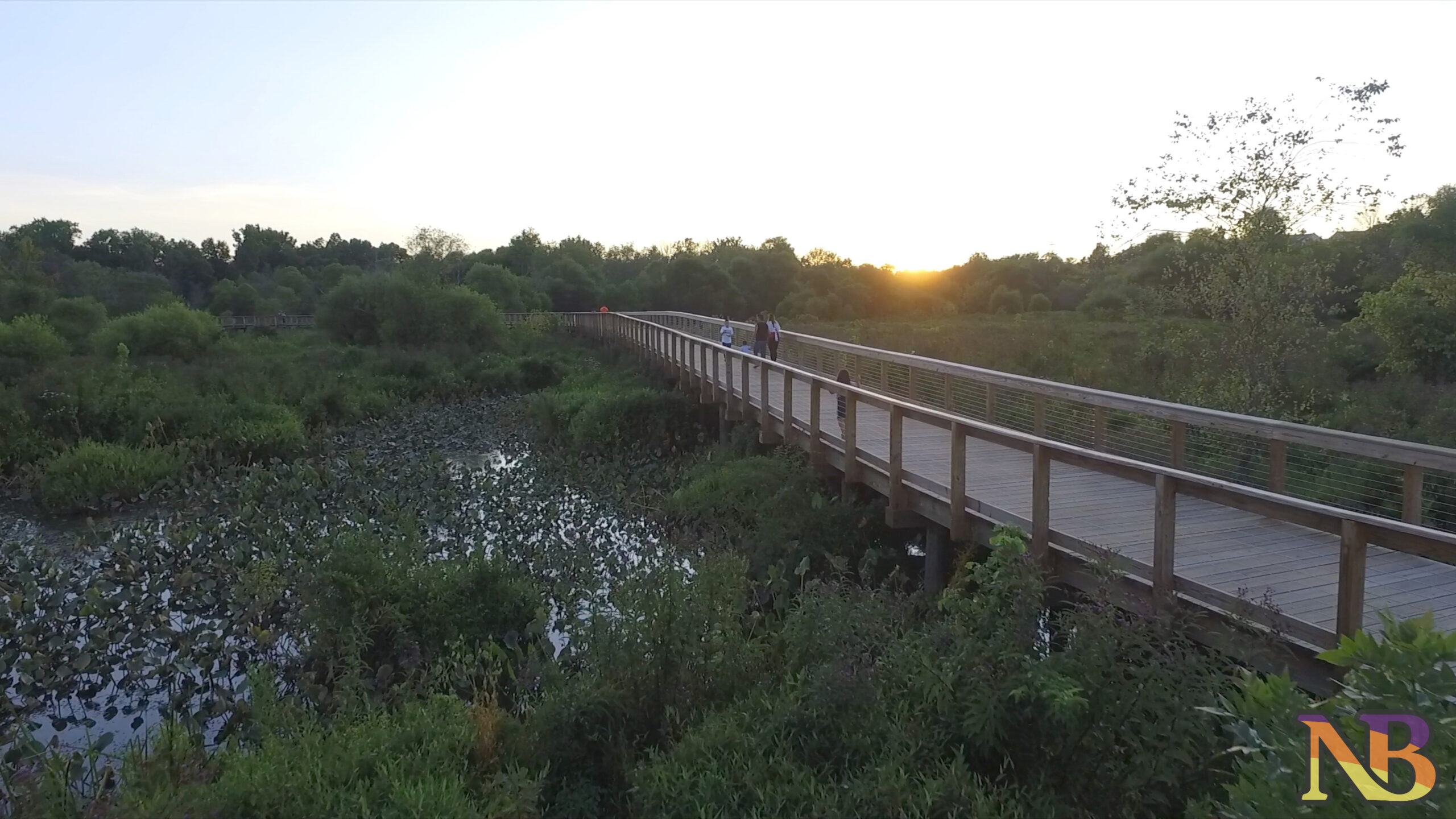
Pedestrians enjoying wetlands via boardwalk, Neabsco Creek Boardwalk, Woodbridge, VA
Photo credit: Andrew Politano Photography
Vegetation also transforms outdoor spaces throughout the year. Deciduous trees create dense shade during warmer months, but ground vegetation in these areas is open to the sky when the trees lose their leaves. Seasonal plant growth alters visibility along trails and around structures.
Environmental planning considers how vegetation affects shade, sightlines, drainage, and access during all seasons. A boardwalk architect can use all of these aspects to design for both visitor comfort and plan to minimize effects on the local plant life both during construction and for the future.
Considering Wildlife Activity
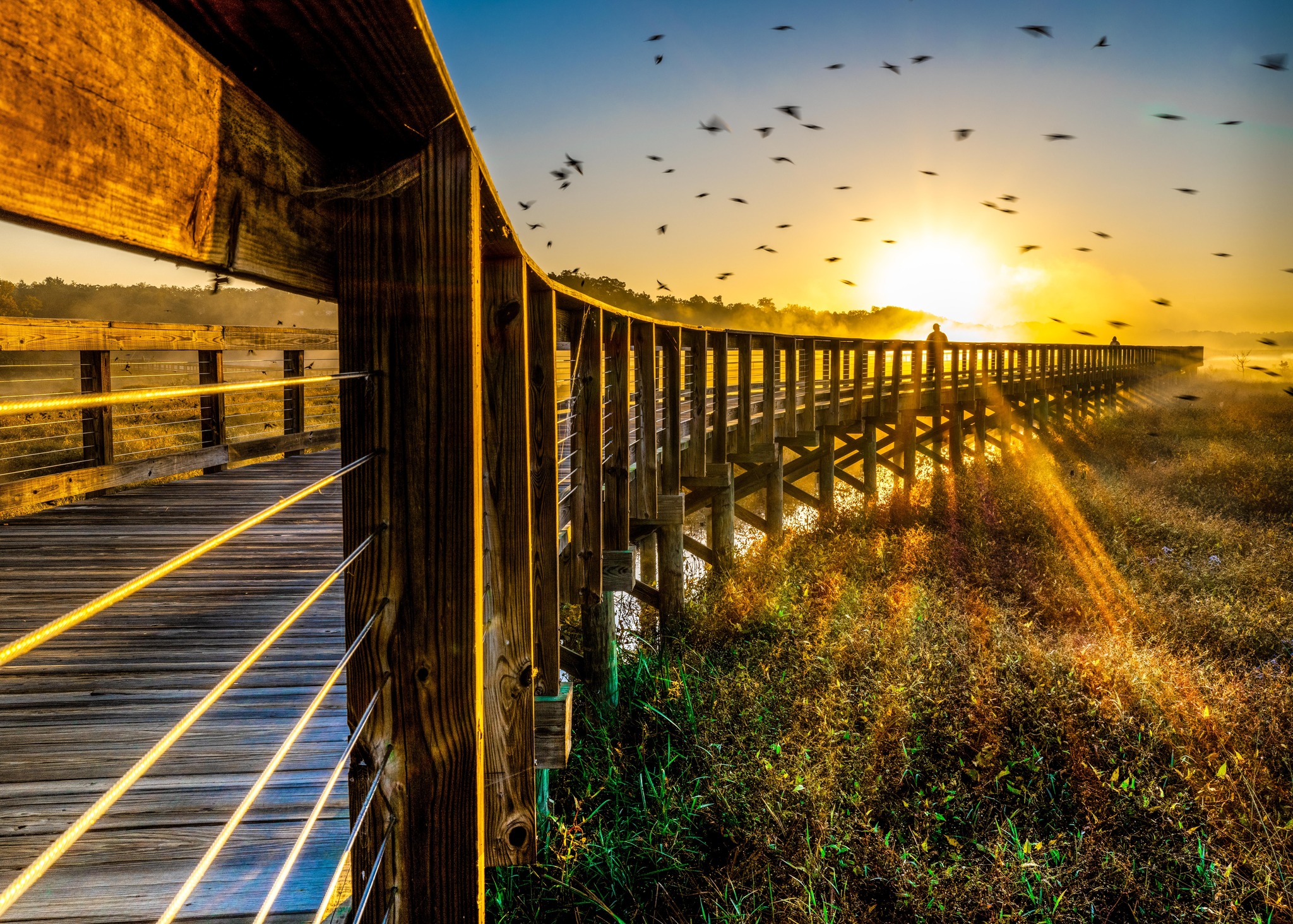
Birds flying over boardwalk, Neabsco Creek Boardwalk, Woodbridge, VA
Photo credit: Charles Mitchell
Animals use the landscape in different ways throughout the year. Migration, breeding, nesting, and food consumption all influence when and where animals are active. That activity can be used to help plan construction schedules and infrastructure placement to reduce any concerns with sensitive species or habitats. For example, dune crossover construction on a beach should be planned around sea turtle nesting and hatching times, or building a boardwalk in wetlands may be planned around the area’s migratory bird season.
Planning around known periods of wildlife activity can help protect the area’s animal populations. Once structures are open to visitors, designated boardwalks and pathways can also help keep foot traffic concentrated in appropriate areas rather than allowing visitors to choose informal routes through a habitat.
Thinking Beyond Today
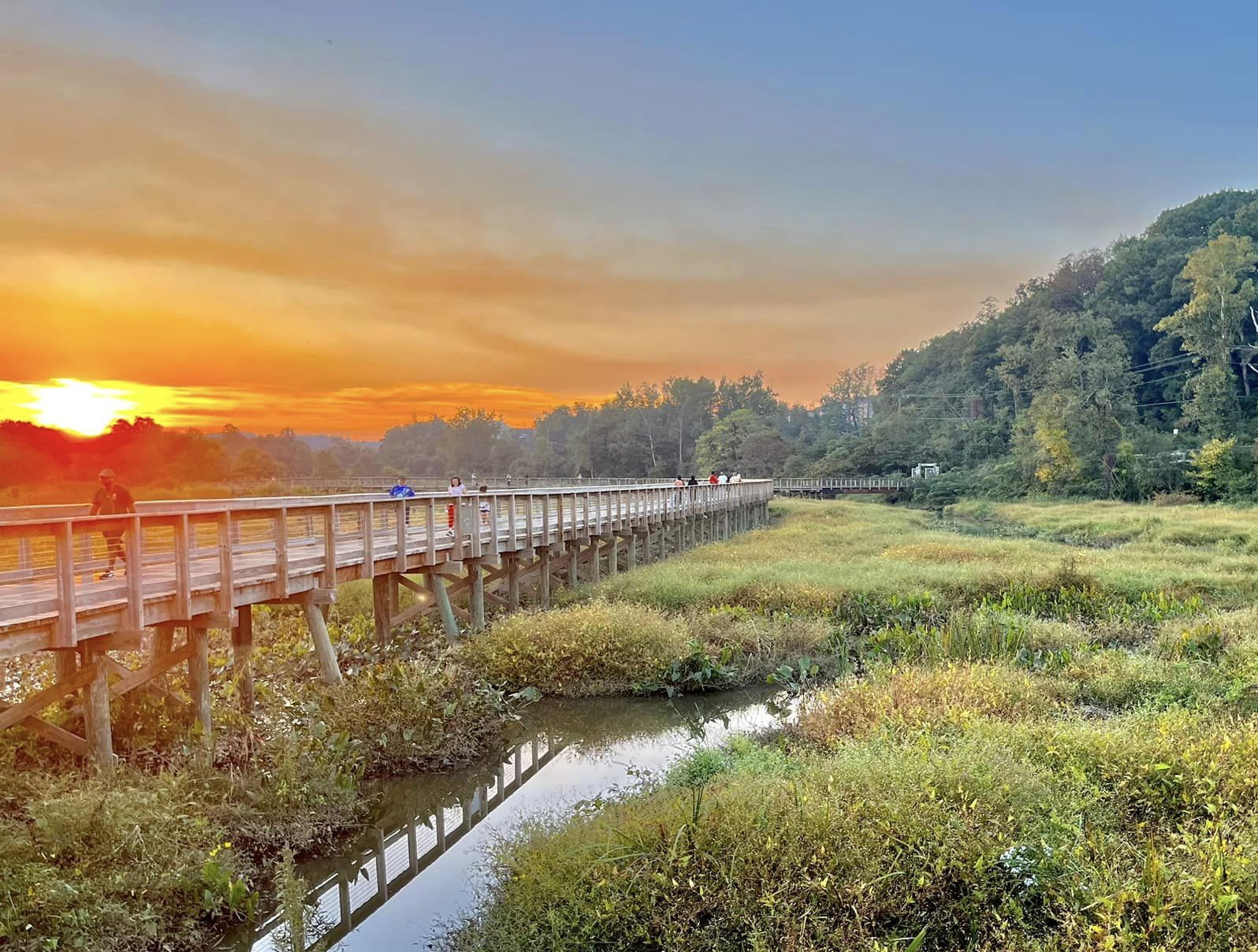
Pedestrians on boardwalk over wetlands, Neabsco Creek Boardwalk, Woodbridge, VA
Photo credit: Steve Walden
A site visit during one month only shows a snapshot of an area. Effective planning for seasonal ecosystems requires a broader understanding of how water, plant, and animal patterns contribute to landscape change throughout the year. Historical site information, environmental assessments, and observation across different seasons can all help inform project decisions.
When we consider seasonal and other conditions from the beginning of a project, we can create infrastructure that works more effectively with the surroundings. We can proactively help parks and communities anticipate changing maintenance, access, and visitor needs rather than reacting to changes after they happen. Planning now can reduce maintenance and repairs later.
For outdoor projects that must perform with changing natural environments, Nature Bridges provides experience building bridges, boardwalks, and other structures for a range of site conditions, including sensitive habitats. Contact Nature Bridges to discuss construction solutions that support access while respecting the surrounding landscape.