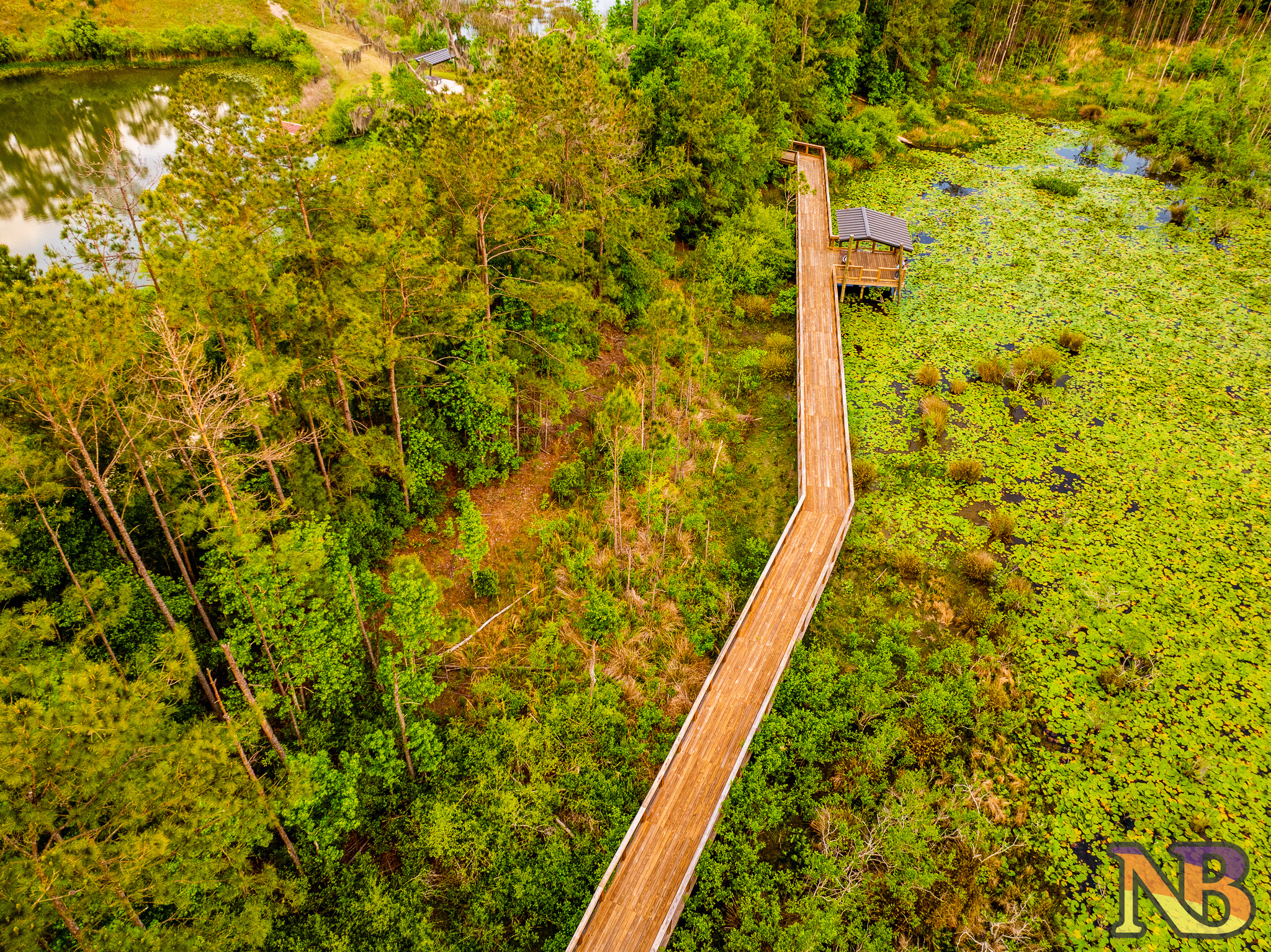
Boardwalk and covered overlook over wetlands, Debbie Lightsey Nature Park, Tallahassee, FL
Photo credit: Ryan Ketterman Photography
Wetlands are one of nature’s most valuable resources for managing water. These areas help regulate water movement and capture sediment. While doing so, they support diverse plant and animal communities. As people develop parks, trails, and other public spaces, it’s important to understand the relationship between wetland ecosystems and stormwater management. Proper planning can help preserve the natural functions of wetlands while providing opportunities for recreation and environmental education.
How Wetlands Manage Stormwater
Wetlands can store water during periods of heavy rainfall, reducing downstream flooding and managing the area’s changes in water levels. Wetland vegetation also slows water movement. This process gives suspended sediment time to settle. As water passes through wetland soils and plants, some pollutants and excess nutrients are retained, absorbed, or transformed through biological processes.
These functions make healthy wetland ecosystems valuable components of broader stormwater management strategies. However, their effectiveness depends on factors like wetland type, soil conditions, vegetation, and the volume of water entering the system.
How to Protect Natural Water Movement
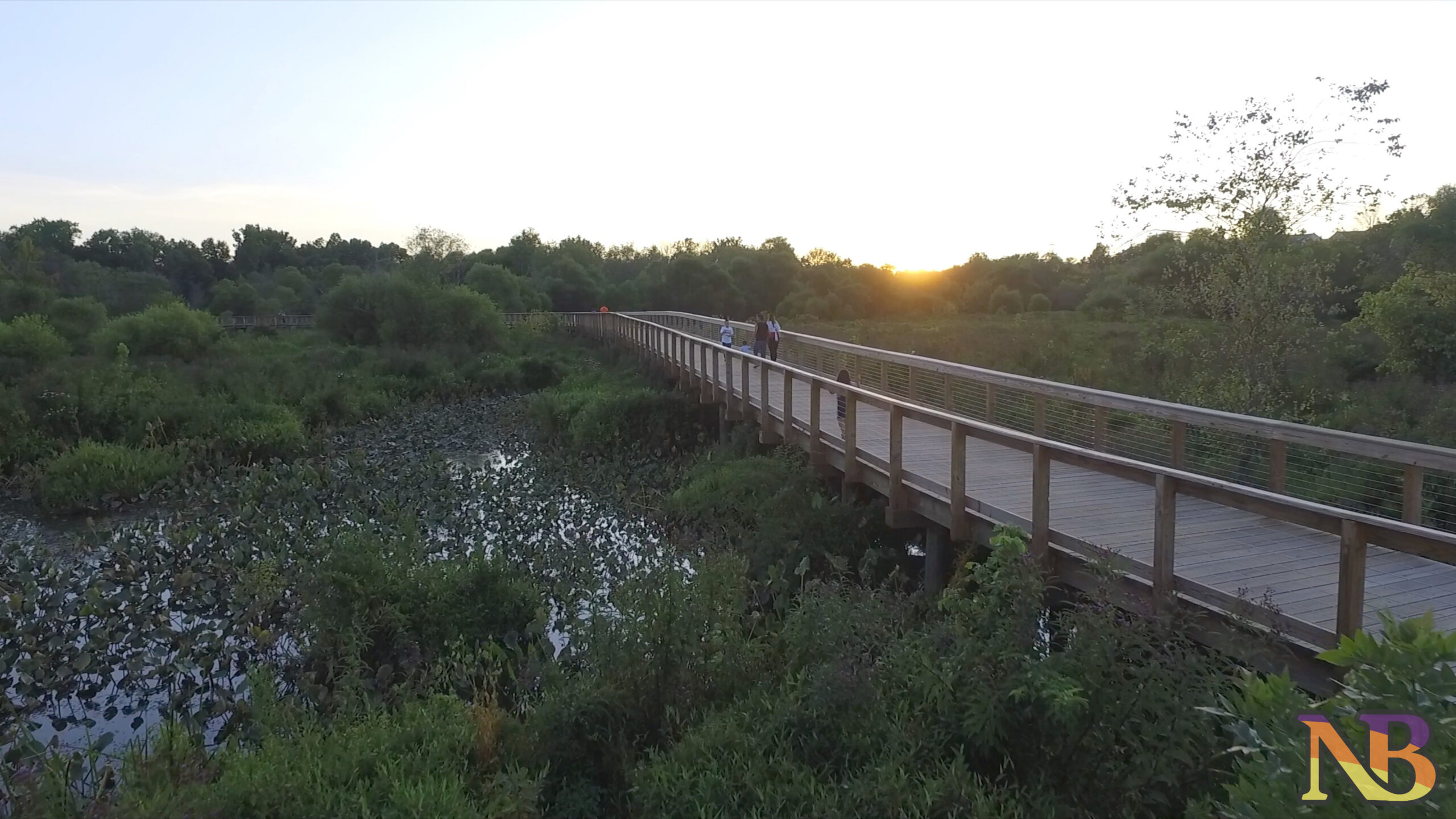
Pedestrians on boardwalk over wetlands, Neabsco Creek Boardwalk, Woodbridge, VA
Photo credit: Andrew Politano
Outdoor structure designers consider maintaining natural drainage patterns to be important when developing infrastructure in and near wetlands. Changes to water flow can alter soil moisture, affect vegetation, and influence the ecological processes that support healthy wetlands.
Bridges and elevated boardwalks can provide access across these habitats while reducing the need for extensive ground-level pathways. Properly designed structures can also accommodate natural water movement beneath them, which helps preserve existing drainage conditions.
Construction Methods that Reduce Disturbance
Construction activities can affect sensitive wetland soil and plants. Equipment traffic and excavation may disrupt drainage patterns or crush existing plant communities. Specialized techniques like top-down construction can help limit these impacts. By building progressively from completed sections, thoughtful construction crews can reduce the need to move heavy equipment repeatedly across sensitive ground.
Careful planning of foundation locations and construction access also supports environmental protection by limiting unnecessary disturbance. Top-down construction and other eco-friendly methods are important to the health of these sensitive areas.
Creating Opportunities for Environmental Education

Sign on railing at wetlands overlook, Debbie Lightsey Nature Park, Tallahassee, FL
Photo credit: Ryan Ketterman Photography
Access structures can help visitors understand the importance of wetlands without requiring them to walk directly in the habitat. Elevated walkways and observation decks provide opportunities to observe water movement and wildlife. Educational signs can explain how wetlands filter water, support biodiversity, and contribute to stormwater management. When we educate visitors, they can learn to appreciate the value of wetland ecosystems and find ways to contribute to environmental protection.
For projects involving wetlands and other sensitive environments, Nature Bridges constructs paths and observation platforms that support public access while considering surrounding site conditions. Contact Nature Bridges to discuss outdoor infrastructure solutions that balance visitor needs with the preservation of natural landscapes.